



/
FieldWrk

"The speed at which Shade keeps adding features, innovating, and creating a system that truly makes sense for creative teams has been incredible. We’re very happy Shade campers."
Alexander Volberding
Video Director @ FieldWrk
WEBSITE
HEADQUARTERS
Nashville, TN
STRUCTURE
Hybrid
INDUSTRY
Creative Agency
SWITCHED FROM
Air, Frame.io
1
About FieldWrk
A production-forward agency built for the blue-collar world
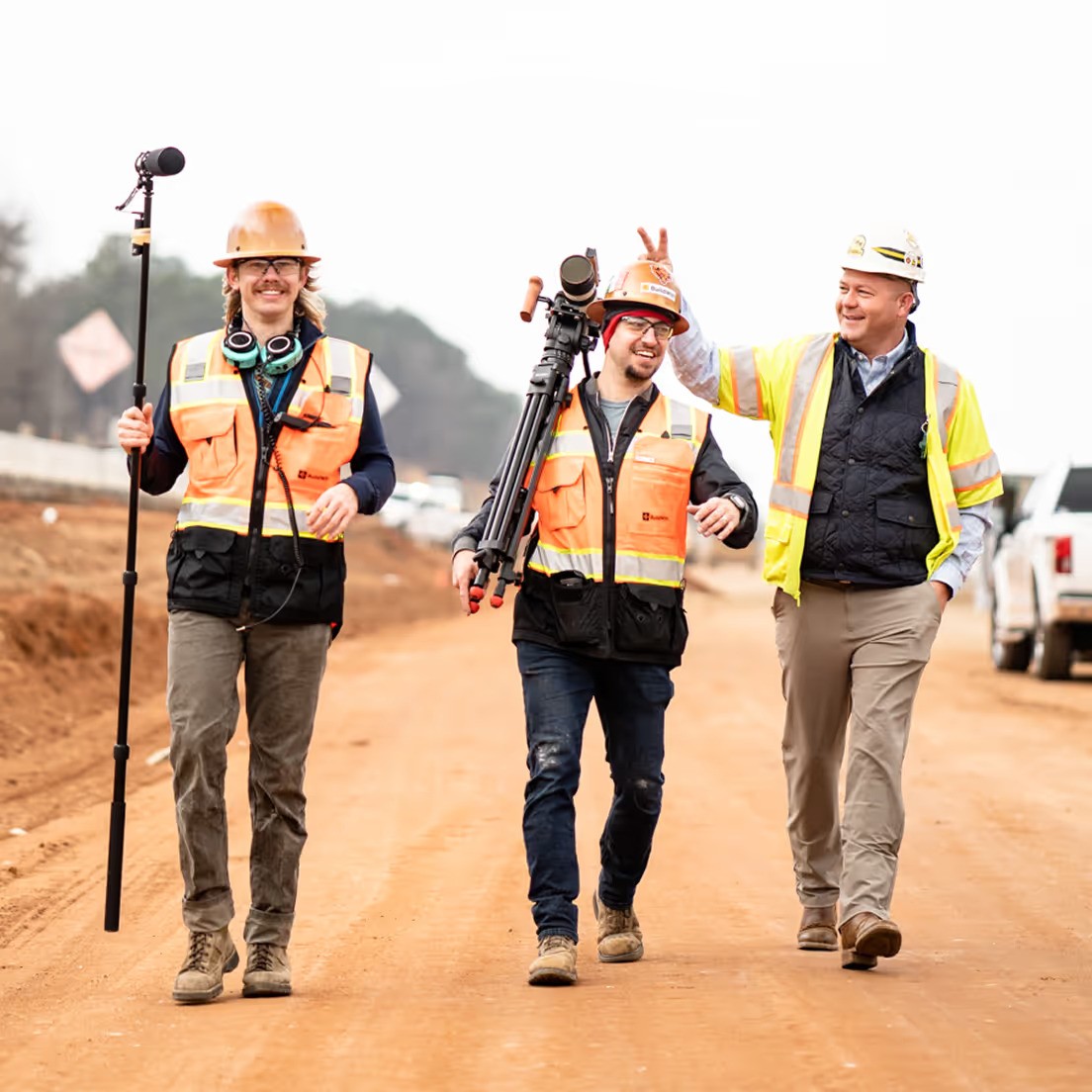
FieldWrk is a branding and marketing agency with a production arm operating exclusively in the blue-collar world, with a big focus on heavy civil. Their team is constantly on job sites across the U.S. filming everything from the biggest equipment on site down to day-to-day crews in the field.
FieldWrk is also new—spun out of BuildWit at the beginning of the year—so the team built their post-production system intentionally from the ground up.
2
The Challenge
When footage lives on hard drives, most of it never gets used
Before Shade, the creative team’s “system” was essentially a literal wall of hard drives—“where footage went to die.” The reality was painful: on many shoots, a large percentage of captured footage never saw the light of day, even though clients were paying for it.
As demand shifted toward social-first content and rapid reuse, the old approach couldn’t keep up:
Remote collaboration was fragile and inconsistent.
Sharing usable assets with clients (and their lean internal marketing teams) took too long.
Finding the right clip meant scrubbing timelines and hunting across drives.
FieldWrk needed a workflow that made every shoot’s footage accessible, reusable, and searchable—without slowing down post.
Learn why top agencies, global brands, and high-growth enterprises use Shade.
3
Introduction to Shade
A mountable, centralized workspace that makes footage usable again
Shade became FieldWrk’s home base for active work—where projects can “live and die” inside a single system. After a shoot, footage is transferred to “hot drives” (SSDs), backed up, and then uploaded to Shade—often the same night from a hotel.
Once uploads are in place, editors can immediately mount Shade and start ingesting footage. That also means FieldWrk can pull from a broader talent pool: editors and freelancers from anywhere can jump in without being tied to a local drive setup.
4
The New Workflow
Libraries that clients can actually use (and social teams can move fast with)
A core part of FieldWrk’s workflow is building libraries for each client. The team pulls the best shots onto a timeline, trims, color grades, and exports clips individually—then uploads them into a Shade library.
From there:
Clients can review, approve/deny, and download finished clips (including proxies).
The experience is simple enough that “somebody who barely understands how to open their email” can still download and use footage.
Internal social teams—who may not be pro editors—can quickly grab clips and drop them into tools like CapCut.
Shade’s search and AI-driven organization makes libraries more powerful over time. Teams can search within a library by category and metadata, and quickly locate what they need (e.g., searching for a “bulldozer” or a “hard hat”) instead of manually scrubbing footage.
5
Present Outcome
Faster turnarounds, more reuse, and more value per shoot
With Shade as the central system of record, FieldWrk replaced fragmented tools and drive chaos with a workflow built for reuse.
The result is a measurable productivity lift:
Search and review times are down by 65%.
Each project saves about 20 hours previously spent transferring, relinking, and hunting for assets.
Overall productivity is up 35%, driven by faster handoffs, remote-ready collaboration, and libraries that expand what clients can do with the footage they already paid to capture.
Instead of shipping one final video and shelving the rest, FieldWrk delivers a reusable, searchable library of color-graded clips that helps clients publish more content, faster—without increasing production days.